When the Defense Tried to Unwind the Case: How One Airtight Service Record Defeated a Motion to Quash
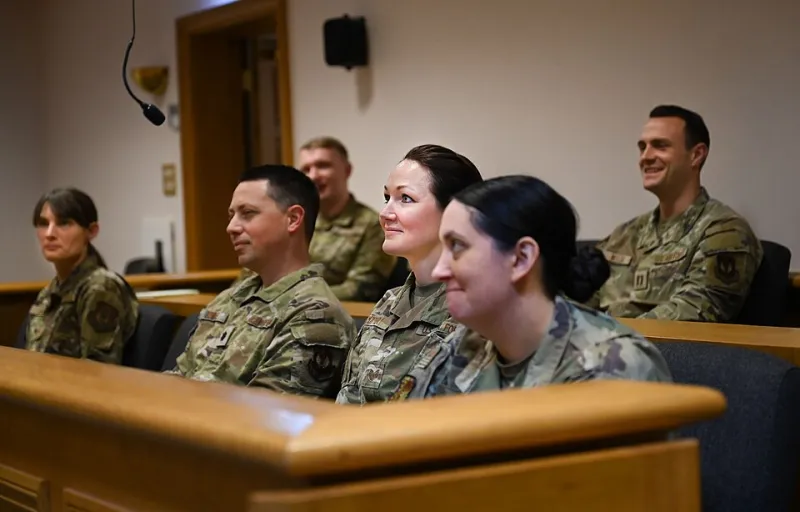
Photo: U.S. Air Force photo by Senior Airman Ashley Talley, Public domain, via Wikimedia Commons
Every litigator knows the fear. The case is moving, discovery is underway, and then an envelope arrives from opposing counsel: a motion to quash service of process, asserting the defendant was never properly served. Suddenly, the entire foundation of the litigation is under attack.
That is precisely what happened in a commercial debt collection matter our team supported last year. The details below are anonymized, but the lessons are drawn directly from the file — and they illustrate why the difference between a service that survives scrutiny and one that collapses usually comes down to paperwork the defendant never sees until it is too late to exploit it.
The Challenge: "That Wasn't Me, and I Wasn't There"
The case involved a limited liability company and its managing member, both named defendants in a breach-of-contract action filed in a state trial court. The serve in question took place at the member's residence — a gated community in a suburban county — on a Tuesday evening in early autumn.
Three weeks after service was completed, the defendant moved to quash, swearing in an affidavit that he had been out of state on the date of service, that the person described in the return did not match him, and that no one at the household had accepted documents on his behalf.
Under the applicable state rules, a motion to quash places the burden on the plaintiff to establish proper service, typically through the process server's proof. A generic affidavit — name, address, date, done — would have made this a genuine evidentiary fight. Instead, the record told a story the defendant's affidavit could not overcome.
What the File Actually Contained
When the motion was filed, we assembled the complete service package. It included far more than the statutory affidavit:
- Three service attempts logged with timestamps. The first attempt occurred on a Saturday morning; the second, the following Monday at midday; the third, the successful serve on Tuesday at 6:40 p.m. Each entry recorded weather conditions, vehicle observations, and the outcome of the attempt.
- Time-stamped photographs. The server photographed the residence exterior, the visible unit number, and — with the documents in hand and partially visible — the individual who accepted service, captured from a respectful distance that did not compromise the serve.
- A contemporaneous narrative. The server's notes described the recipient stating he was the managing member's adult son who resides at the address and would ensure his father received the papers, along with a physical description, approximate age, and the vehicle in the driveway registered to the defendant.
- Corroborating skip tracing data. Department of Motor Vehicle records and utility data confirmed the defendant's residence at the address, and his corporate filings listed the same location as his address of record.
The affidavit itself was drafted with unusual care. Rather than reciting boilerplate, it tracked each element of the state's service rule — substituted service upon a person of suitable age and discretion residing at the dwelling — and described the basis for the server's belief that the requirements were met, paragraph by paragraph.
How the Hearing Played Out
At the hearing, defense counsel relied almost entirely on his client's sworn denial. But the denial created a factual conflict, and the record gave the court every reason to credit the server. The photographs matched the property. The timeline was internally consistent. The server's description of the recipient was specific enough to be credible, and the defendant's own DMV and corporate records corroborated the address.
The court denied the motion from the bench, noting that the defendant's out-of-state claim was undermined by the vehicle photographed in his driveway bearing plates matching his registration.
The Takeaways for Attorneys
The lesson is not that process servers should expect motions to quash — most serves are never challenged. The lesson is that when a challenge does come, the quality of the underlying record is decisive. Attorneys vetting service providers should ask three questions:
- Does the server photograph the location and attempt on every job, or only when problems arise?
- Are attempt notes contemporaneous and detailed, or reconstructed later from memory?
- Is the affidavit drafted to the specific elements of the governing rule, rather than a one-size-fits-all template?
A service of process is only as strong as the proof behind it. When the record is built deliberately — timestamps, images, narrative, and statutory language working together — a motion to quash becomes an opponent's expensive mistake rather than your emergency.