December's Narrow Windows: Keeping Filings and Serves on Schedule When the Calendar Fights Back

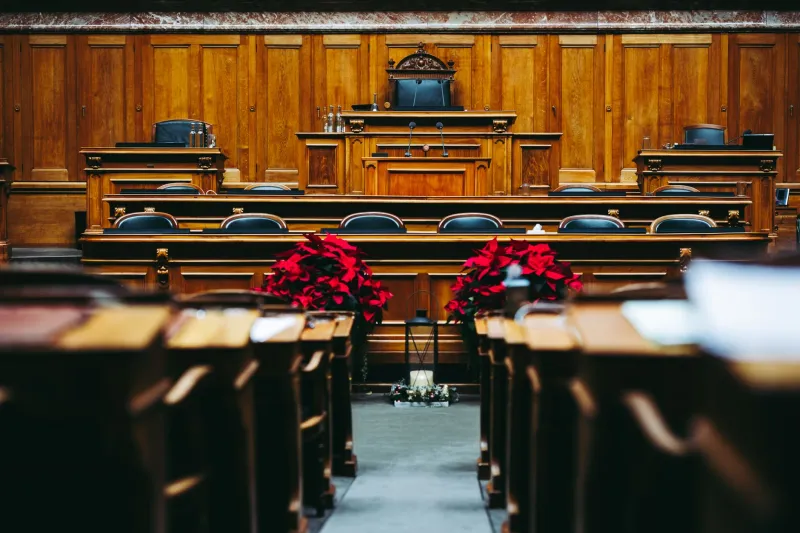
Photo: Joe Mabel, CC BY-SA 3.0, via Wikimedia Commons
Every December, litigation calendars collide with a month that seems designed to slow them down. Statutory deadlines land on days when clerks' offices sit dark. Service attempts stretch into evening hours because that is when recipients are actually home. And a single miscounted day — a deadline that rolled to the next business day because of a federal holiday — can mean the difference between a timely filing and a motion to dismiss.
For attorneys managing year-end matters, understanding how the December gauntlet works is not optional. It is practice management in its most literal form.
The Deadline Math Attorneys Get Wrong in December
Federal Rule of Civil Procedure 6(a)(1)(A) is straightforward on its face: if a filing deadline falls on a Saturday, Sunday, or legal holiday, the deadline moves to the next business day. But "legal holiday" is where the trouble begins. The federal calendar recognizes Christmas Day and New Year's Day, and when either falls on a weekend, the observed holiday shifts — often catching practitioners who assumed the holiday fell where the calendar says it does.
State courts complicate things further. Some jurisdictions observe additional December holidays or half-days that do not appear on the federal schedule. A deadline that would have been safe in one state may collapse in another simply because the local clerk's office closed at noon on Christmas Eve.
The practical takeaway: verify the actual holiday schedule of the specific court where you are filing, not the general federal calendar. A five-minute call to the clerk can save a five-figure malpractice exposure.
Shrinking Courthouse Hours and the Late-December Squeeze
The last two weeks of December are notoriously unreliable for court operations. Many state courthouses operate on reduced schedules between Christmas and New Year's, and some close entirely for several business days. E-filing systems may accept documents around the clock, but filings submitted during a closure are often deemed filed the next business day — which can be a problem when the next business day falls after your deadline.
Attorneys handling time-sensitive matters should:
- Confirm holiday hours in writing with the clerk's office by mid-December, not the week of the filing.
- File early rather than on the deadline, particularly for documents requiring a judge's signature or an order before year-end.
- Build a buffer into service deadlines, since a server who cannot complete attempts before a closure cannot simply pick up where they left off.
The Flip Side: Defendants Are Finally Home
Here is the paradox of December litigation — while courthouses slow down, service of process often gets easier. For eleven months of the year, process servers chase recipients who dodge attempts, work long hours, or simply are not home. In late December, that dynamic reverses.
People take vacation. College students return to family residences. Extended holiday weekends mean someone answers the door at 6 p.m. on a weekday. For cases that have stalled after repeated unsuccessful attempts, the holiday window can be the most productive service period of the year.
This is especially true for:
- Eviction and landlord-tenant matters, where tenants are more likely to be home during holiday breaks.
- Family law service, where personal, non-confrontational delivery is easier when routines are relaxed.
- Hard-to-locate defendants identified through skip tracing, whose holiday travel patterns create new — and lawful — opportunities for service.
Skilled servers plan for this. Rather than treating December as a dead month, experienced process serving teams front-load attempts into the days surrounding Christmas and New Year's, when the odds of a completed serve rise sharply.
Coordinating Service and Filing in the Same Tight Window
The real challenge in December is not service or filing in isolation — it is the interplay between the two. Proof of service must often be filed within a set number of days after completion. If your server completes service on December 23 and the clerk's office does not reopen until December 26, your filing window has already been consumed by the closure.
The fix is procedural discipline:
- Instruct servers to return affidavits immediately, not in end-of-week batches.
- Pre-file what can be pre-filed, so only the proof of service remains outstanding.
- Calendar the rolled deadline, not the nominal one — if service is completed December 24 and you have ten days to file proof, your true deadline is not January 3; it is whatever date the clerk's actual holiday schedule produces.
A Logistics Partner for the Year-End Rush
At A2Z Process Service, December is when our nationwide network earns its keep. Coordinating serves across multiple jurisdictions, tracking which courthouses close when, and delivering notarized affidavits in time for year-end filings is precisely the kind of logistical work that separates a professional legal support partner from a directory listing.
If your docket includes matters with December or January deadlines, the time to act is now — before the closures begin and the recipients start answering their doors. Reach out to our team to map your service and filing schedule against the holiday calendar, and keep your litigation on track through the season when everything else slows down.