Four Doors, One Law Office: What the Inside of a Process Server's Vehicle Reveals About Professionalism
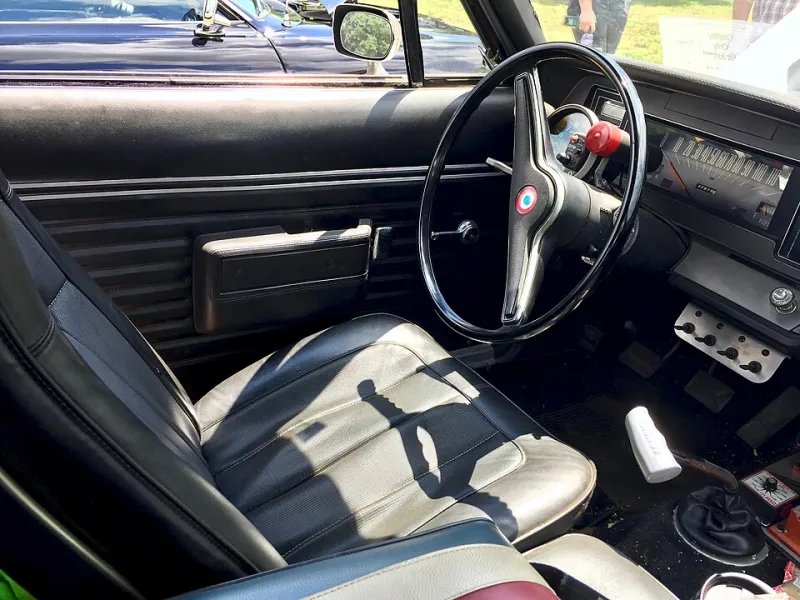
Photo: CZmarlin — Christopher Ziemnowicz, a photo credit would be appreciated if this image is used anywhere other than Wikipedia., CC0, via Wikimedia Commons
Ask an attorney how they evaluate a process server and you will hear about licensure, insurance, turnaround statistics, and maybe a referral from a colleague two counties over. Rarely does anyone ask what the server's vehicle looks like at seven in the morning when the third attempt on a hard-to-locate defendant is about to begin. Yet that vehicle is, in a very real sense, the law firm's satellite office. Everything that happens inside it — the organization, the redundancy, the quiet discipline of a well-stocked dashboard — determines whether the affidavit that eventually crosses your desk is airtight or anecdotal.
The Front Seat Is a Filing System
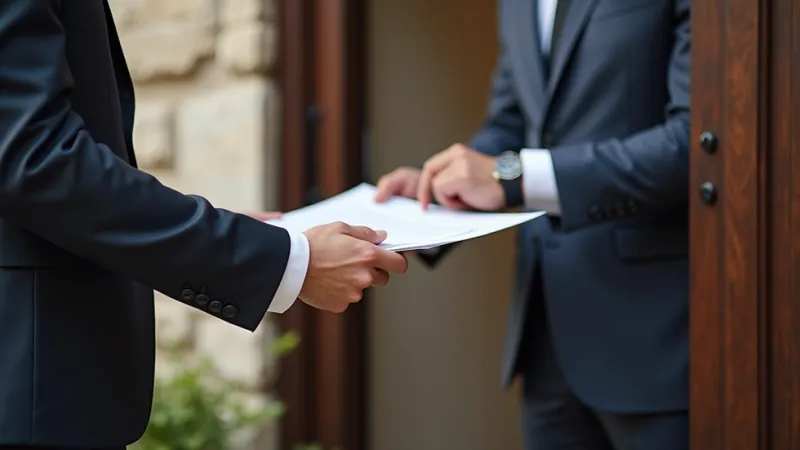
A professional server's car does not resemble a commuter's. Documents are segregated by case, not crammed into an envelope. Originals travel in a rigid folder; copies stay separate so a door-step handoff never risks surrendering the only copy. Tabs or labeled sleeves keep multiple serves distinguishable when a server is working four matters in the same ZIP code.
This is not fussiness. Courts in many jurisdictions require the server to produce the exact documents at the time of service, and a mixed-up stack in a hurry is how the wrong papers end up in the right hands — a defect that can survive unnoticed until a motion to quash surfaces months later. The filing system in the front seat is litigation risk management at its most granular.
Redundancy on Four Wheels
The unglamorous inventory of a serious mobile operation reads like a checklist written by someone who has been stranded before:
- Printed maps. GPS fails in rural stretches and gated communities alike. A paper map of the target county is standard gear, not nostalgia.
- Backup power. A charged power bank and a car charger, because a dead phone at the moment of service is a dead attempt.
- Weather contingency. Ziplock bags for documents, a towel for the seat, water for long surveillance windows in July heat or February wind.
- Field documentation tools. A dash-mounted phone cradle positioned for timestamped photographs, a notepad for contemporaneous notes, and a pen that works in the cold.
- Contingency clothing. Servers dress for the neighborhood, not the office. A jacket and neutral attire stay in the trunk because appearing at a door in a way that alarms the recipient defeats the purpose.
None of this appears on an invoice. All of it appears in the quality of the record.
Why Attorneys Should Care About the Trunk
It is tempting to view the server's vehicle as their problem. But consider what happens downstream. The affidavit of service recites facts — time, address, description, manner of service — that the server must reconstruct from memory or notes gathered in that car. A server who documents attempts in real time, from a vehicle organized to make documentation easy, produces affidavits that hold up under cross-examination. A server who reconstructs the day from a jumbled text thread produces affidavits that invite scrutiny.
In an era when courts increasingly expect GPS stamps, photographs, and detailed attempt logs, the mobile workstation has become the foundation of the evidentiary record. The car is where the proof is made before it is ever sworn to.
Hobbyists Versus Professionals
The difference between a hobbyist and a professional rarely shows up in the first successful serve. Anyone can hand papers to a cooperative recipient on a Tuesday afternoon. The difference appears on attempt four, at nine at night, in the rain, when the recipient won't open the door but a neighbor's security camera is rolling. The hobbyist improvises. The professional works from a system: documented attempts, legal hours observed, a vehicle stocked to stay on station as long as the job requires.
For law firms managing high-volume dockets — landlord-tenant matters, debt collection, family law — this distinction compounds. A hundred serves handled by an improvised operation generate a hundred small risks. The same hundred handled by a disciplined one generate a clean, uniform record.
The Desk You Never See
When A2Z Process Service fields a serve anywhere in the country, the attorney sees two things: a confirmation and, eventually, an affidavit. Everything between those two artifacts — the maps, the water, the spare folder, the charged battery — stays invisible by design. But it is not incidental. It is the difference between a serve that merely happened and a serve that can be proven.
The next time you retain a process server, it is fair to ask what their field operation looks like. A professional will have an answer. A hobbyist will have a car.